Capabilities · one site, one release standard
What Pepti can do for GLP-1 raw material, and what it does not do
From a public sequence to a released lot with a certificate: synthesis of lipidated 31- to 39-residue peptides, purification, lyophilization, filling, labelling, cold-chain dispatch and documentation, all at the Guangzhou site. Stated without capacity figures, because a buyer should judge a manufacturer by its released lots, not its brochure.
Synthesis of lipidated GLP-1-family peptides
The six compounds share one manufacturing route with compound-specific steps.
All six compounds on this site are made by solid-phase peptide synthesis: the protected sequence is assembled residue by residue on a resin, with the non-natural residues (α-aminoisobutyric acid in semaglutide, tirzepatide and retatrutide) handled as standard building blocks. The sequences are public through the WHO INN records and PubChem; Pepti does not claim any proprietary sequence, and a buyer can check the theoretical mass of every compound without asking.
What separates this family from plain research peptides is the fatty-diacid side chain. Semaglutide carries a C18 diacid, tirzepatide and retatrutide a C20 diacid, cagrilintide a C20 diacid, and mazdutide and survodutide their own acylations, each attached to a lysine through a linker. The acylation step, whether performed on the resin or in solution after assembly, is where most of the compound-specific process work sits, and it is the source of the impurity classes (missing or doubled side chain, linker variants) that the impurity guide describes.
Cagrilintide adds a controlled disulfide-forming oxidation between its two cysteines after cleavage; the certificate's mass result reflects the bridged form. None of the six requires a recombinant route; all are chemical syntheses, which is why one site can release the whole family against one certificate format.
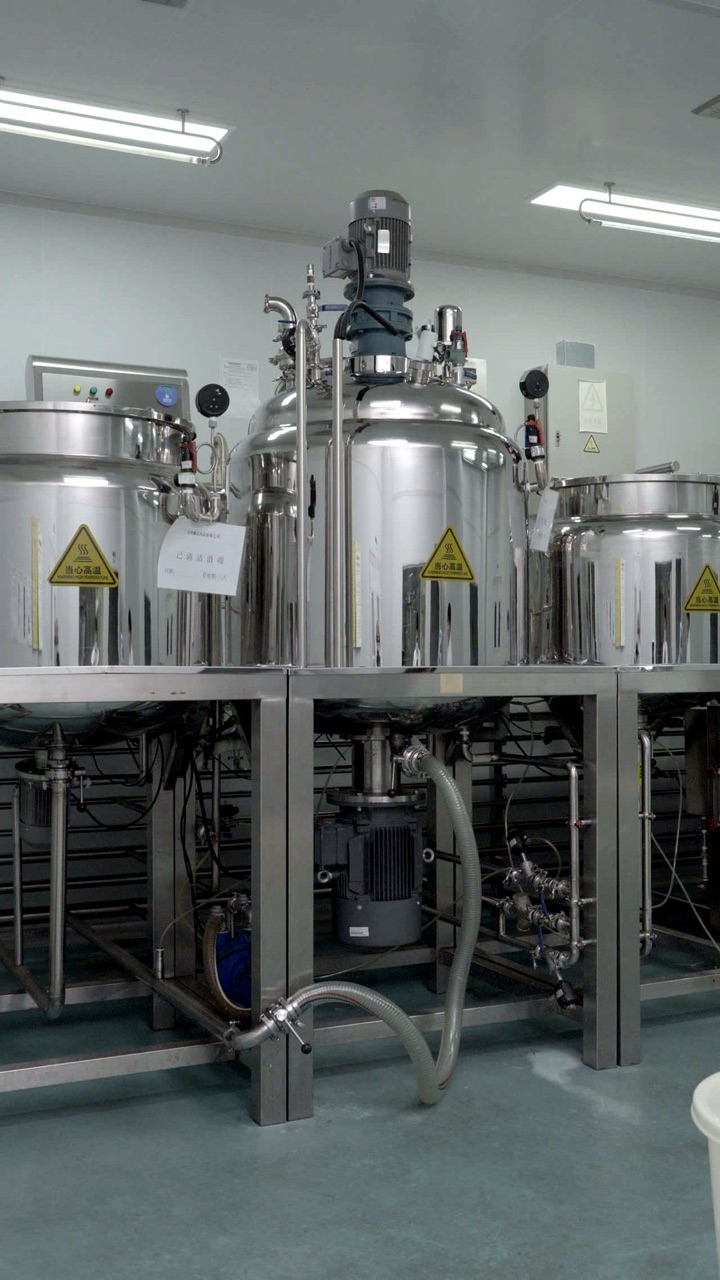
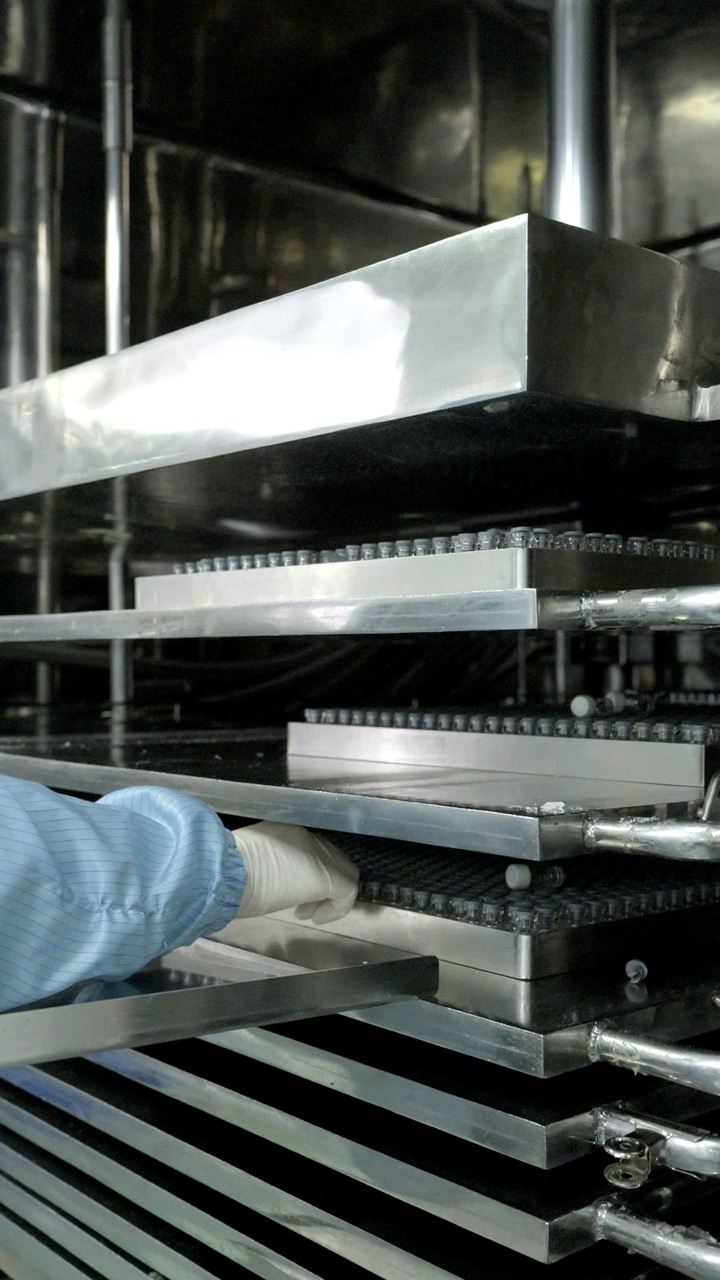
After cleavage from the resin and removal of protecting groups, the crude peptide is purified by preparative reversed-phase HPLC on a C18 phase with an acidified acetonitrile gradient, the fractions meeting the purity target are pooled, and the pool is lyophilized to a dry powder. That powder is the raw material; everything downstream (filling, labelling, packing) is handling, not chemistry.
Formats, units and minimums
Two formats from one released lot; one unit system across the family.
Raw powder
Bulk lyophilized powder from 5 g, shipped cold-chain, in a sealed container carrying the lot alias, with the lot certificate. Chosen by research groups and fill-finish partners that weigh their own aliquots.
Lyophilized vials
The same lot filled as lyophilized powder in stoppered, crimped glass vials. The unit is fixed: 1 kit = 10 vials. A sample order is 1 kit (10 vials). Published strengths per compound are listed on each compound page; other fills from the same lot are quoted on request.
Labels and cartons
Neutral labels by default, carrying compound, strength, lot alias and the research-use line. Private-label OEM, with buyer artwork on label, carton and insert, starts at 50 kits (500 vials) per artwork after a proof is approved.
Lead-time ladder
Typical windows for the GLP-1 family, counted from specification and payment confirmation.
- Sample kits5–10 days
typically, for 1-kit sample orders of a listed GLP-1 compound
- Production batch14–21 days
typically, for a first production batch after specification is confirmed
- OEM repeat order21–28 days
typically, for private-label repeat batches with artwork already approved
Lead times are typical ranges, not commitments; the applicable window is confirmed on each RFQ.
The windows differ because the work differs. A sample kit is filled from a released lot and only needs packing and courier booking. A production batch runs the whole route above for your specification, including release testing and the certificate. An OEM repeat adds label printing, carton proofing and a labelled fill after release. When released stock exists for a production-size request, the quote says so and the window shortens; when a custom strength or sequence is involved, the quote says that too. The formats guide explains why filling adds time to a raw-powder order.
Release testing and documentation
Two instruments, three dates, one lot alias everywhere.
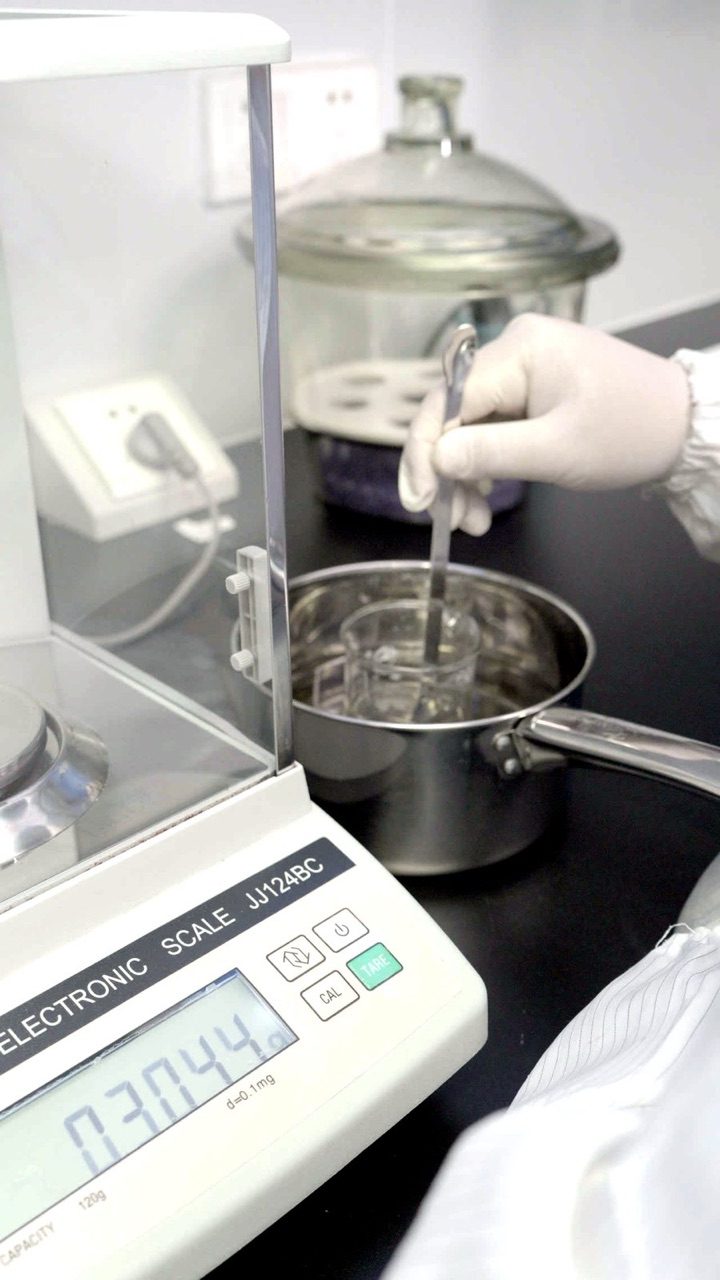
Every lot is tested in-house before release by reversed-phase HPLC for chromatographic purity (area-percent of the main peak) and by electrospray mass spectrometry for molecular-weight identity (observed mass against the theoretical mass of the published formula). The results go on the certificate of analysis together with the manufacture date, the test date and the retest date, and the lot alias that appears on the certificate is printed on the bulk container, the vial label and the carton.
The chromatogram and the mass spectrum behind the two numbers are available for a buyer's lot on request, so a receiving laboratory can match method conditions before re-testing. The HPLC versus MS guide explains what each result proves and what it does not.
Pepti publishes a selection of batch records in a public library on peptioem.com; the GLP-1-family records are linked from each compound page here and summarized on the quality page. Public records show the document format and the range of results; the shipped lot always carries its own certificate.
For buyers who want an independent data point, Janoshik Analytical report #210105 on one Pepti Retatrutide 20 mg sample (19.52 mg content, 99.837% purity, analyzed 2026-10-07) is verifiable at the laboratory. It is sample-specific. Pepti also supports buyers who send a received vial from a 1 kit (10 vials) sample to a laboratory of their own choice.
Packing and cold-chain dispatch
Insulated carton, cold packs or dry ice by route, lot alias on the outside.
Lyophilized peptide is stable when kept dry and cold, so dispatch is built around keeping it that way: sealed primary containers or vials, an inner carton with the lot label, an insulated outer box with gel packs or dry ice depending on the route and season, and the courier airway bill with the destination visible. A packing photograph with the lot label and airway bill can be sent on WhatsApp before courier collection on request. Published dispatch photographs, grouped by month and tagged by destination with recipient details blurred, are on the order-photos page.
Buyer eligibility, destination rules and intended use are reviewed before a quote becomes an order. Pepti does not give import or customs procedure advice; the buyer is responsible for the rules at the destination.
What Pepti does not do
Stated so that the right buyers stay and the wrong ones leave early.
Pepti also does not publish capacity figures, equipment lists or facility photographs as proof of capability, because those are the easiest things for a clone site to copy. The proof it offers is the one that cannot be copied: released lots with certificates whose lot aliases can be followed from quote to carton, and public records on its own domain that a buyer can open before paying.
Questions buyers ask
Can Pepti make a GLP-1 analogue that is not on this site?
Yes, as a custom sequence from 100 kits (1,000 vials), typically about 15 days after specification and payment confirmation. Send the sequence and specification on the RFQ; feasibility is confirmed before payment.
Does Pepti fill vials from a buyer's own powder?
Filling is offered for lots Pepti synthesizes and releases, so that the certificate, the lot alias and the fill record belong to one chain. Ask on the RFQ if your project needs something different; the reply will say whether it fits.
What strengths can be filled?
The strengths with public records are listed on each compound page (for example 5 mg to 100 mg for tirzepatide and retatrutide). Other fills from a released lot are quoted on request inside the production-batch window.
Is there a capacity limit for raw powder?
Raw powder is quoted from from 5 g, shipped cold-chain upward against a specific lot. Larger quantities are quoted as one or more production batches; the quote names the lead-time window and whether released stock exists. Pepti does not publish capacity figures.
Is the Guangzhou site a drug-substance facility?
No. Pepti does not present itself as a cGMP drug-substance (API) manufacturer or CDMO and does not publish a GMP certificate or DMF. The site produces research-use peptide raw material for research organizations, laboratories and B2B buyers.
Request a quote for GLP-1 raw material
Send the compound, format (raw powder or lyophilized vials), quantity and destination. Mike at Pepti Supply replies on WhatsApp with the applicable batch record, lead-time window and unit pricing; email works too: contact@peptioem.com.